



VEPPANU MOA
The First-and-Only FDA-Approved PROTAC
VEPPANU Was Specifically Designed to Recruit the UPS, Remove ERs, and Repeat the Process1,2
VEPPANU is the first approved PROTAC (PROteolysis-TArgeting Chimera) within a novel class of drugs called heterobifunctional protein degraders.1,3
VEPPANU harnesses the cell's own protein disposal system—the ubiquitin-proteasome system (or UPS)*—to directly target ERs for elimination. Each VEPPANU PROTAC molecule can degrade multiple ERs. This process efficiently leads to a reduction of ER levels in breast cancer cells.1,3,4

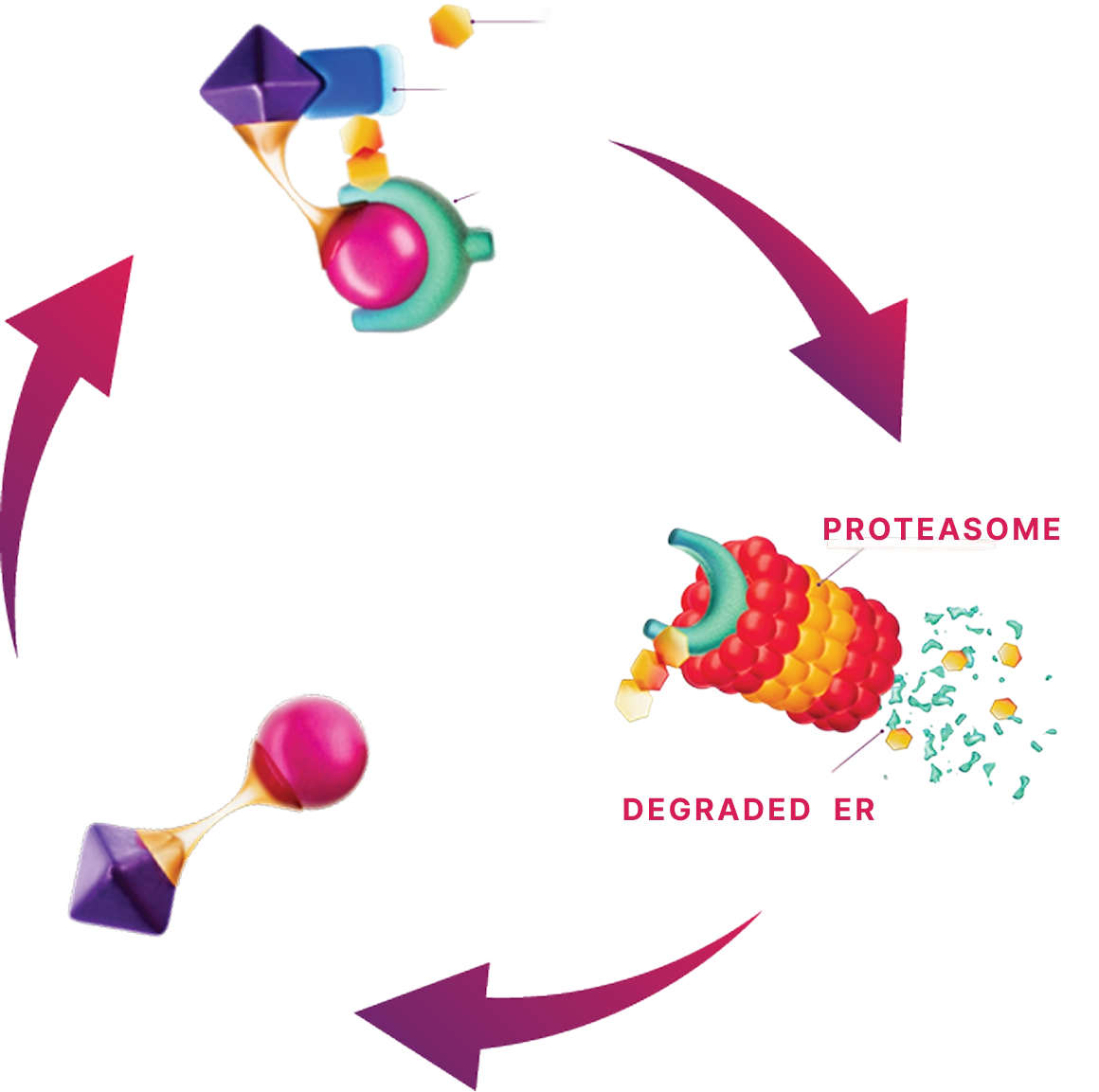

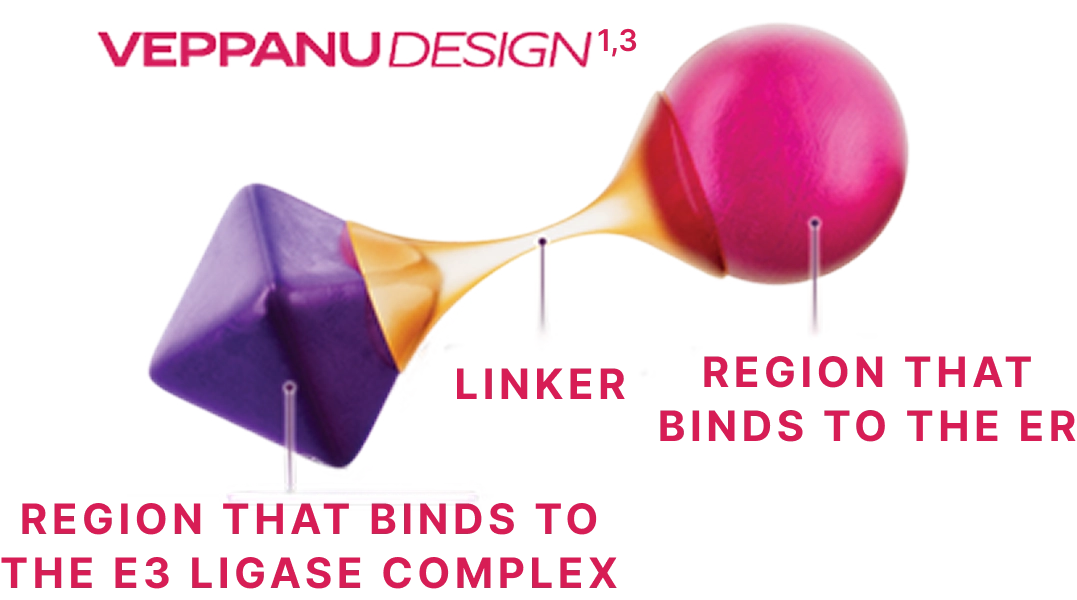

VEPPANU binds to an estrogen receptor and recruits an E3 ligase complex to tag the receptor with a chain of ubiquitin proteins1,5

The ubiquitin-tagged estrogen receptor is then recognized and eliminated by the proteasome1,2,5-7

Because VEPPANU bonds transiently and reversibly to both the E3 ligase complex and the ER, it is able to repeat this process multiple times until metabolized2,5,8
UBIQUITIN
ER
E3 LIGASE COMPLEX


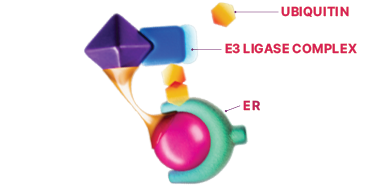

VEPPANU binds to an estrogen receptor and recruits an E3 ligase complex to tag the receptor with a chain of ubiquitin proteins1,5

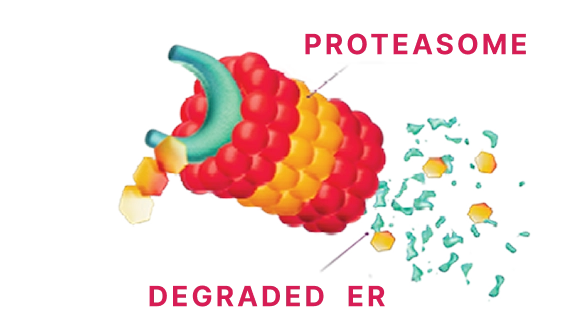

The ubiquitin-tagged estrogen receptor is then recognized and eliminated by the proteasome1,2,5-7


Because VEPPANU bonds transiently and reversibly to both the E3 ligase complex and the ER, it is able to repeat this process multiple times until metabolized2,5,8
PROTAC: A Different Mechanism to Eliminate Estrogen Receptors5
SERD AND PROTAC MECHANISMS
The clinical relevance of these mechanisms of action is unknown. No conclusions regarding clinical efficacy or safety should be drawn from these findings.
| Oral SERDs | PROTAC | |||
|---|---|---|---|---|
| Binding mechanism | 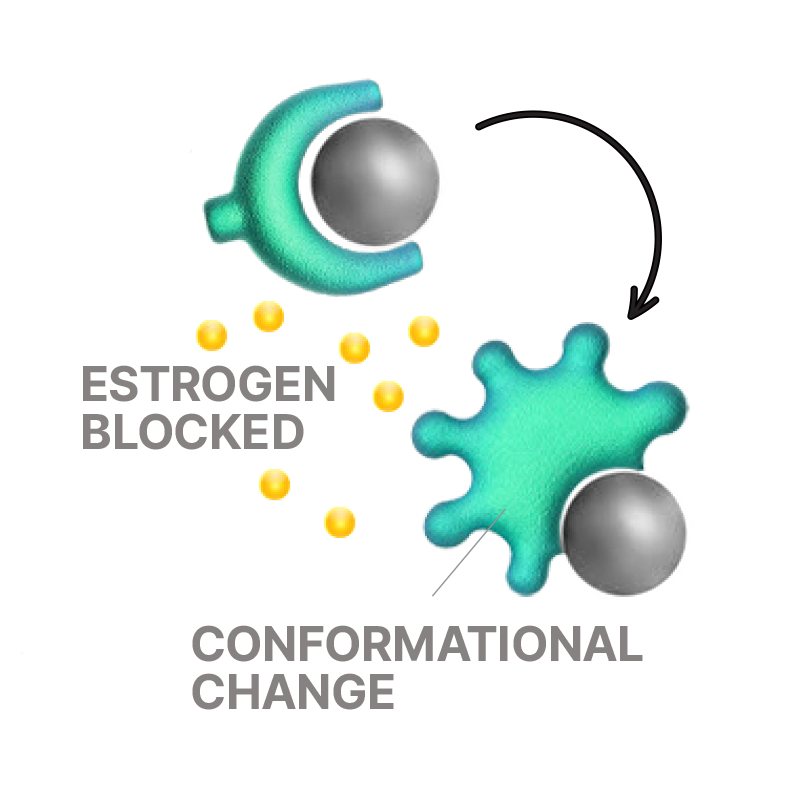 |
Binds to ER and causes a conformational change3,5,9 |
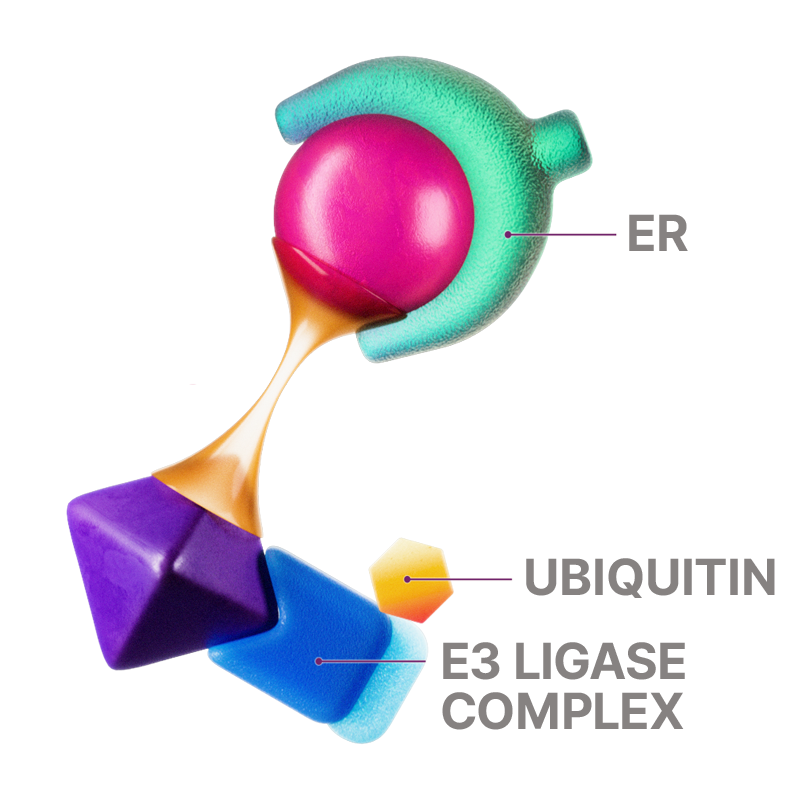 |
Binds to ER and an E3 ligase, initiating polyubiquitination2,5-7 |
| Mechanism of degradation | 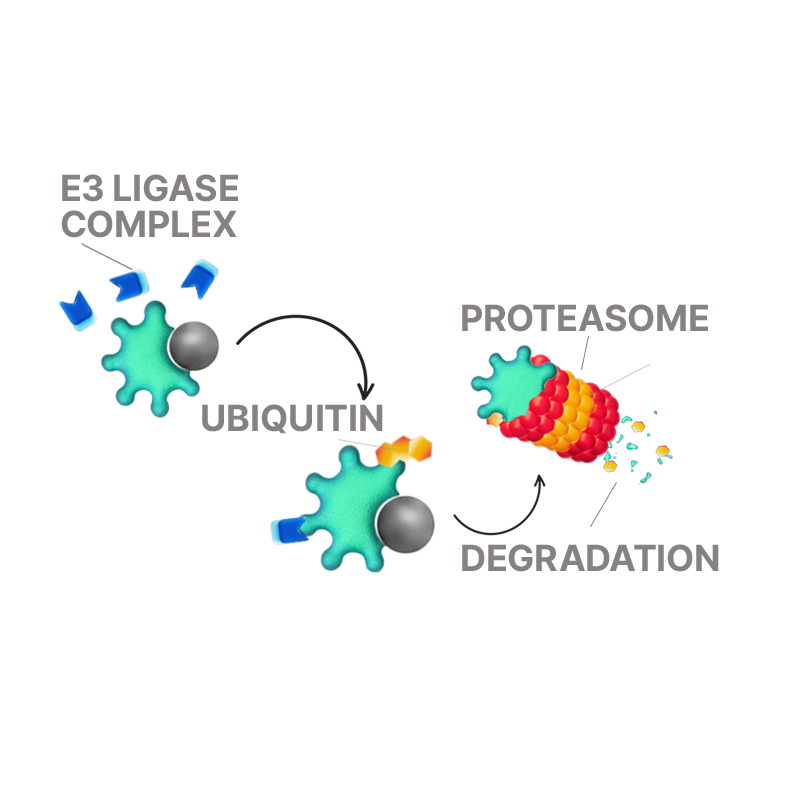 |
INDIRECT Degradation is a secondary effect of conformational change3,5,10 |
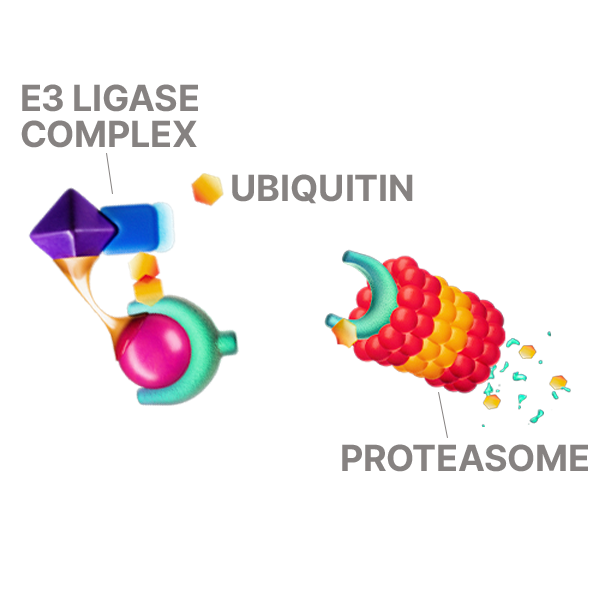 |
DIRECT |
| Repetitive function | 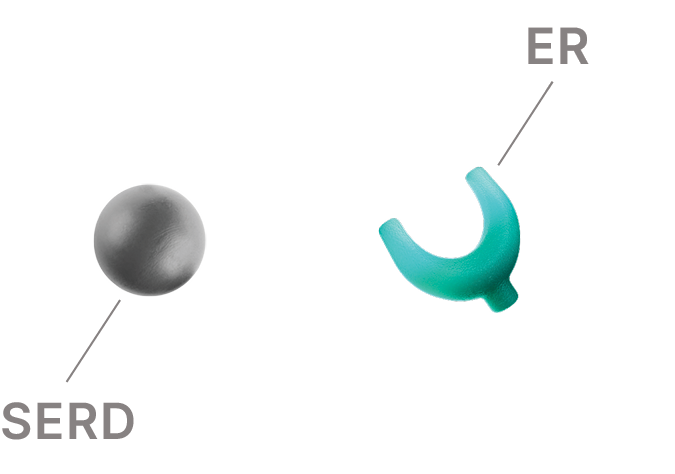 |
SERDs rely on |
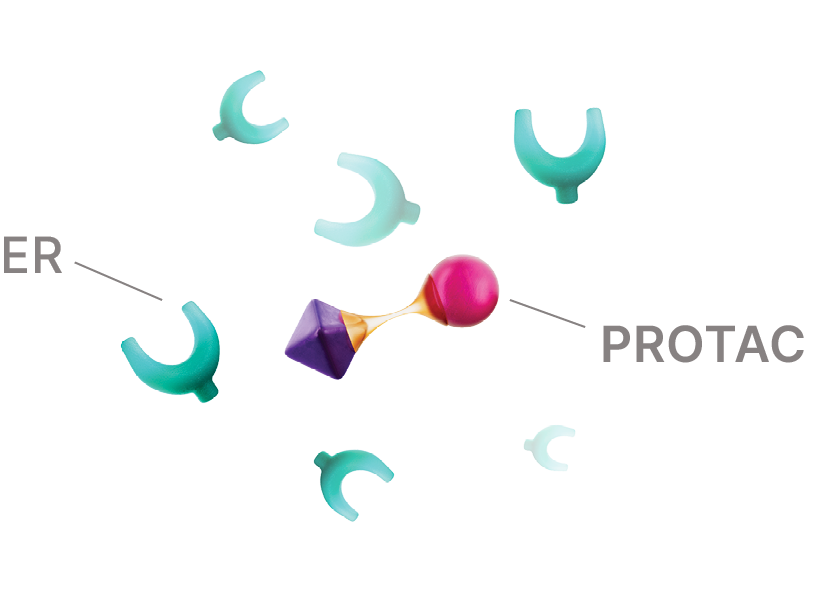 |
PROTAC can degrade multiple ERs until metabolized2,5,8 |
| Scale of ER degradation† |  |
Oral SERDs degraded 8%-68% of ER in a preclinical study11 |
 |
VEPPANU degraded 79%-86% of ER in a preclinical study11 |
| Oral SERDs | ||
|---|---|---|
| Binding mechanism | |
Binds to ER and causes a conformational change3,5,9 |
| Mechanism of degradation | |
INDIRECT Degradation is a secondary effect of conformational change3,5,10 |
| Repetitive function | |
SERDs rely on 1:1 binding for functionality3 |
| Scale of ER degradation† | |
Oral SERDs degraded 8%-68% of ER in a preclinical study11 |
| PROTAC | ||
|---|---|---|
| Binding mechanism | |
Binds to ER and an E3 ligase, initiating polyubiquitination2,5-7 |
| Mechanism of degradation | |
DIRECT |
| Repetitive function | |
PROTAC can degrade multiple ERs until metabolized2,5,8 |
| Scale of ER degradation† | |
VEPPANU degraded 79%-86% of ER in a preclinical study11 |
*
The ubiquitin-proteasome system (UPS) is part of normal, ongoing cellular maintenance that works to remove unneeded, misfolded, and/or damaged proteins.11
†
In a preclinical trial with 2 wild-type ER+ breast cancer lines after 4 hours of treatment, the maximal degradation rates ranged between 8% and 68% for the oral SERDs approved at the time of the study (elacestrant and imlunestrant); the maximal degradation rates ranged between 79% and 86% for VEPPANU. In ESR1m ER+ breast cancer lines, maximal degradation rates ranged from 9% to 62% for elacestrant and from 79% to 85% for VEPPANU.11
ER=estrogen receptor; ER+/HER2−=estrogen receptor–positive/human epidermal growth factor receptor 2–negative; ESR1m=estrogen receptor 1 mutation; FDA=US Food and Drug Administration; mBC=metastatic breast cancer; PROTAC=PROteolysis-TArgeting Chimera; SERD=selective estrogen receptor degrader.


REFERENCES
1. VEPPANU [package insert] South San Francisco, CA: Rigel Pharmaceuticals, Inc. 2. Békés M, Langley DR, Crews CM. PROTAC targeted protein degraders: the past is prologue. Nat Rev Drug Discov. 2022;21(3):181-200. doi:10.1038/s41573-021-00371-6 3. Hamilton EP, Jeselsohn RM, Vahdat LT, et al. PROteolysis TArgeting Chimera (PROTAC) estrogen receptor degraders for treatment of estrogen receptor–positive advanced breast cancer. Target Oncol. 2025;20(3):431-444. doi:10.1007/s11523-025-01137-5 4. Gough SM, Flanagan JJ, Teh J, et al. Oral estrogen receptor PROTAC vepdegestrant (ARV-471) is highly efficacious as monotherapy and in combination with CDK4/6 or Pl3K/mTOR pathway inhibitors in preclinical ER+ breast cancer models. Clin Cancer Res. 2024:30(16):3549-3563. doi:10.1158/1078-0432.CCR-23-3465 5. Hernando C, Ortega-Morillo B, Tapia M, et al. Oral selective estrogen receptor degraders (SERDs) as a novel breast cancer therapy: present and future from a clinical perspective. Int J Mol Sci. 2021;22(15):7812. doi:10.3390/ijms22157812 6. Burke MR, Smith AR, Zheng G. Overcoming cancer drug resistance utilizing PROTAC technology. Front Cell Dev Biol. 2022;10:872729. doi:10.3389/fcell.2022.872729 7. Liu Z, Hu M, Yang Y, et al. An overview of PROTACs: a promising drug discovery paradigm. Mol Biomed. 2022;3(7):46. doi:10.1186/s43556-022-00112-0 8. Chirnomas D, Hornberger KR, Crews CM. Protein degraders enter the clinic – a new approach to cancer therapy. Nat Rev Clin Oncol. 2023;20(4):265-278. doi:10.1038/s41571-023-00736-3 9. Wang Y, Tang SC. The race to develop oral SERDs and other novel estrogen receptor inhibitors: recent clinical trial results and impact on treatment options. Cancer Metastasis Rev. 2022;41:975-990. doi:10.1007/s10555-022-10066-y 10. Campone M, De Laurentiis M, Jhaveri K, et al. Vepdegestrant, a PROTAC estrogen receptor degrader, in advanced breast cancer. N Engl J Med. 2025;393(6):556-568. doi:10.1056/NEJMoa2505725 11. Data on file, Rigel Pharmaceuticals, Inc. September 2026.
VEP_BC-26090 1026